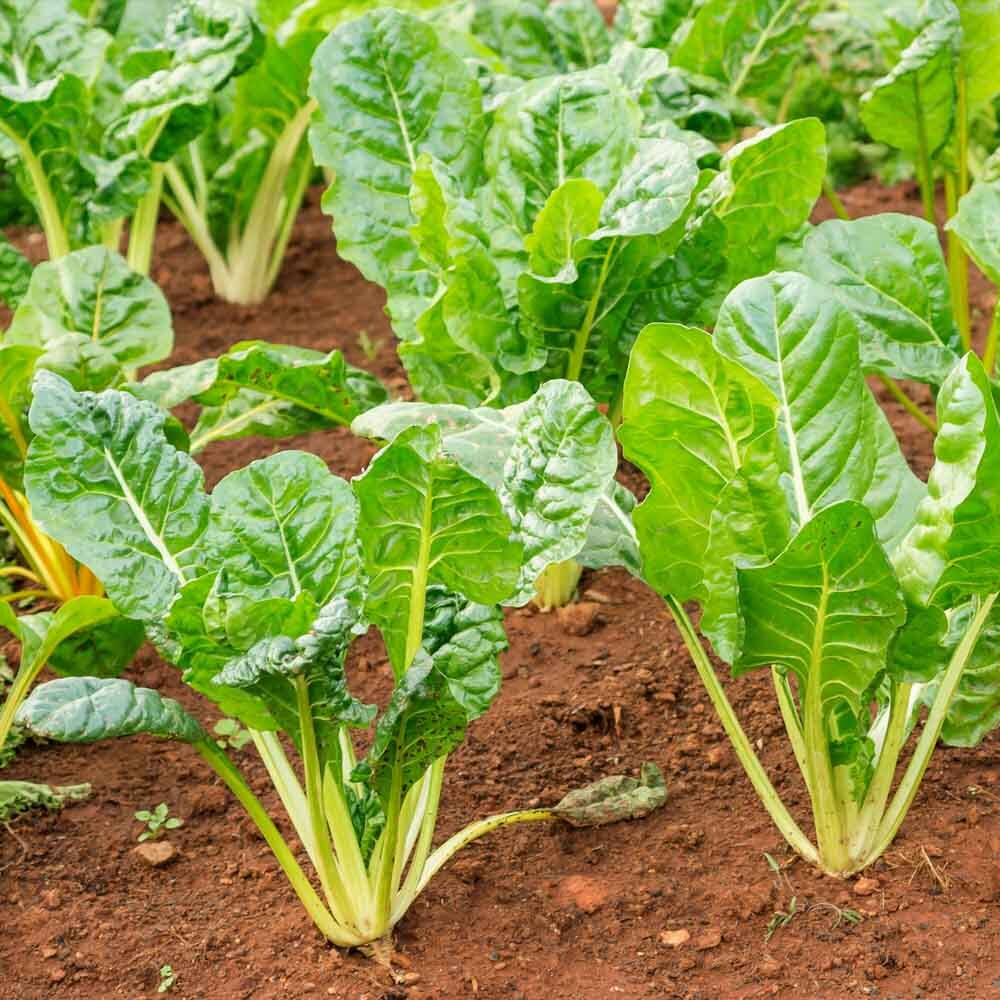
Swiss Chard Green open pollinated seedsSwiss chard, scientifically known as Beta vulgaris subsp. vulgaris, is a leafy green vegetable that belongs to the Chenopodiaceae family. It’s closely related to beets and spinach and is known for its nutrient-rich leaves and colorful stems. Here’s a comprehensive look at Swiss chard:CharacteristicsPlantLeaves: Swiss chard has large, glossy, dark green leaves that are tender and flavorful.Stems: The stems, also called ribs, can be white, yellow, red, pink, or orange, adding a vibrant splash of color to gardens and dishes.Height: Plants typically grow to a height of 30-60 cm (1-2 feet), but some varieties can reach up to 75 cm (30 inches).VarietiesBright Lights: Known for its multi-colored stems.Fordhook Giant: Has broad, dark green leaves and thick, white stems.Rhubarb Chard: Features deep red stems and veins with dark green leaves.Growing ConditionsClimateTemperature: Swiss chard is a cool-season crop that grows best in temperatures between 15°C and 24°C (59°F to 75°F).Frost Tolerance: It is somewhat frost-tolerant and can survive light frosts, but prolonged exposure to freezing temperatures should be avoided.SoilType: Prefers well-drained, fertile soil rich in organic matter.pH: Ideal soil pH is between 6.0 and 7.0.Drainage: Good drainage is essential to prevent root rot.Planting and CarePropagationSeeds: Swiss Chard Green open pollinated seeds is typically grown from seeds. Sow seeds directly in the garden as soon as the soil can be worked in the spring.PlantingSpacing: Sow seeds 1-2 cm (0.5-1 inch) deep, spacing them 5-10 cm (2-4 inches) apart in rows that are 30-45 cm (12-18 inches) apart. Thin seedlings to 20-30 cm (8-12 inches) apart once they have a few true leaves.Depth: Seeds should be planted 1-2 cm deep.WateringFrequency: Keep the soil consistently moist, especially during dry periods. Watering at the base of the plants helps prevent leaf diseases.FertilizationOrganic Matter: Incorporate compost or well-decomposed manure into the soil before planting.Chemical Fertilizers: Apply a balanced fertilizer (e.g., 10-10-10) according to soil test recommendations.Pest and Disease ManagementCommon Pests: Aphids, leaf miners, and slugs can affect Swiss chard. Use organic or chemical controls as needed and practice crop rotation to reduce pest pressure.Diseases: Downy mildew and leaf spot are common diseases. Ensure proper spacing for good air circulation and avoid overhead watering to minimize disease incidence.Harvesting and UsesHarvestingLeaves: Harvest outer leaves when they are young and tender, typically 4-6 weeks after planting. Leave the inner leaves to continue growing.Stems: Stems can be harvested along with the leaves or separately if desired.UsesCulinary: Swiss Chard Green open pollinated seeds is versatile and can be used in salads, soups, stews, stir-fries, and as a cooked green. The stems can be sautéed or used similarly to celery.Nutritional: Rich in vitamins A, C, and K, as well as minerals like magnesium, potassium, and iron. It is also a good source of dietary fiber and antioxidants.Medicinal: Swiss chard has various health benefits, including anti-inflammatory properties and support for cardiovascular health due to its high content of nutrients and antioxidants.SummarySwiss Chard Green open pollinated seeds is a nutritious, colorful, and easy-to-grow leafy green that thrives in cool weather and well-drained, fertile soil. It is versatile in the kitchen, offering both culinary and nutritional benefits. With proper planting, care, and pest management, Swiss chard can provide a bountiful harvest of tender leaves and vibrant stems throughout the growing season.